What is an AI gateway, and how does it help you build with AI?
September 28, 2026
9
mins read
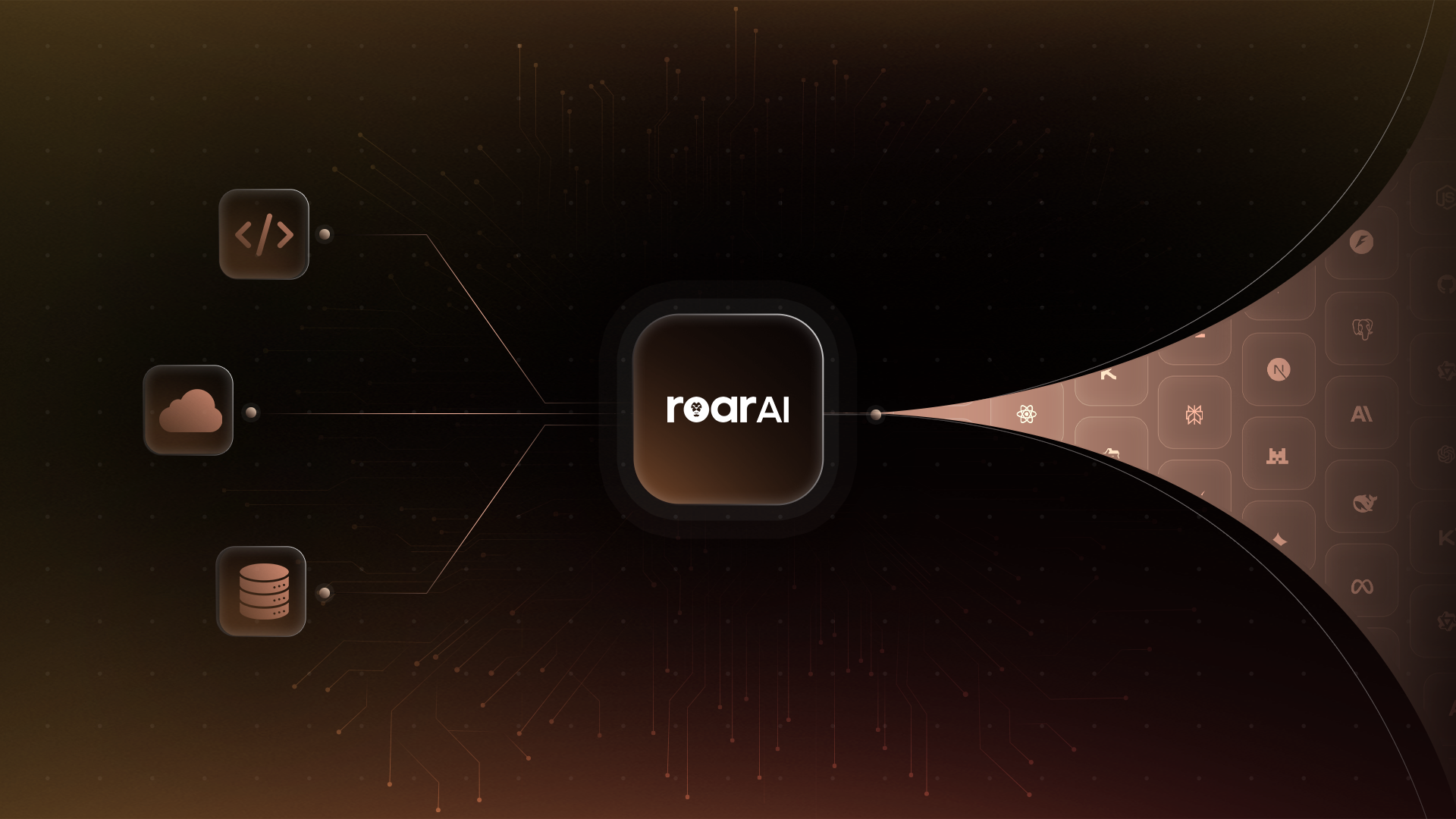
An AI gateway is a software layer that connects your application to AI models through a common interface. It sits between your application and model providers, helping you route requests, control access, apply configured guardrails and monitor usage and costs.
If you’re a developer building AI-powered products, this provides a central place to manage how your applications use AI.
An AI build often starts with a simple prompt. You choose a model, connect it to your application and send a request. A chatbot answers a question. A document tool produces a summary. An assistant drafts an email.
As the build grows, you may want to try another model. A second developer or team might need access. Usage increases, and you need to understand what it is costing. You also need to decide what information your application can send to AI providers and who sets the rules.
The connection that worked for your first experiment now needs more structure. This is where an AI gateway becomes useful.
An AI gateway manages the flow of requests and responses between your application and the AI models it uses. A typical request follows five steps:
The model performs the AI task. The gateway manages how your application accesses it.
Imagine you are building a customer-support tool. You might use one model to answer routine questions and another to handle more complex enquiries. As you develop the product, you may want to compare models or change providers.
With separate integrations, you may need to manage different connections, credentials and usage records for each provider. An AI gateway brings supported models behind a common interface, reducing some of that integration work.
Your support tool sends a request to the gateway, which applies the configured controls and forwards it to the selected model. The response then travels back through the gateway to your tool.
This gives you and your team a shared point for managing AI access as the product grows.
More flexibility as your product evolves
A common interface can make it easier to test and switch between supported models, reducing dependence on a single provider’s integration. Models still differ in their capabilities and behaviour, so switching requires testing.
A clearer view of usage and cost
AI spend can become difficult to follow when it is spread across several projects and providers. Centralised monitoring helps you see what your team is using and where costs are building up. Where supported, budgets and usage limits provide additional control.
One place to apply shared rules
Access permissions and configured guardrails can be managed at the gateway. If there are several people working on one build, this gives them a consistent point for applying controls across connected applications, alongside the safeguards built into each application.
Less repeated development work
Shared infrastructure reduces the need to rebuild connection and management functions for every AI feature, giving developers more time to improve the product itself.
Roar AI is an AI platform from Roar Global that gives builders access to multiple AI models like Anthropic, Open AI, Gemini, Llama, Deepseek, Kimi and 200+ more through a single gateway connection, with controls for access, usage and spend.
For Sri Lankan developers, startups and businesses, Roar AI combines access to global AI capabilities with a gateway hosted in Sri Lanka, local support and billing in Sri Lankan rupees.
The locally hosted gateway acts as the connection and management layer. When a request uses an external provider’s model, processing takes place on that provider’s infrastructure; local gateway hosting alone does not mean all AI processing remains in Sri Lanka. But it means that the apps and solutions built on Roar AI can be hosted locally.
For teams exploring Sri Lankan AI companies, Roar AI is an option to consider when the requirement is infrastructure for building and managing applications that use multiple models.
The best tool depends on what you need to build. A coding assistant can help you write software, an AI model can perform tasks within your application, and an AI gateway can help you manage access to those models.
When choosing an AI gateway in Sri Lanka, consider:
Roar AI is worth evaluating if you want access to multiple models through one connection, alongside local support and rupee billing. Testing it against your own workload will help you assess its suitability.
A small prototype using one model may work well with a direct connection. A gateway becomes more useful as you add models, developers, applications and requirements for oversight.
It provides a more manageable foundation, while model selection, configuration, testing and responsible development remain essential to the quality of your product.
For builders moving from an experiment towards a product people depend on, that foundation can make growth easier to manage.
Explore Roar AI and start building at roar-ai.com.
© 2026 Roar Global. All Rights Reserved.